



Art Deco Wallpaper
Discover Art Deco wallpaper inspired by the confident geometry and decorative glamour of the 1920s and 1930s. Explore distinctive fans, scallops, arches, sunbursts and stylised florals, alongside luxurious interpretations in metallic foil, embroidery, cork, natural fibres and other tactile finishes.
From refined repeating patterns for a complete room to dramatic large-scale designs, the collection brings together authentic period influences and contemporary Art Deco wallcoverings from leading international designers.
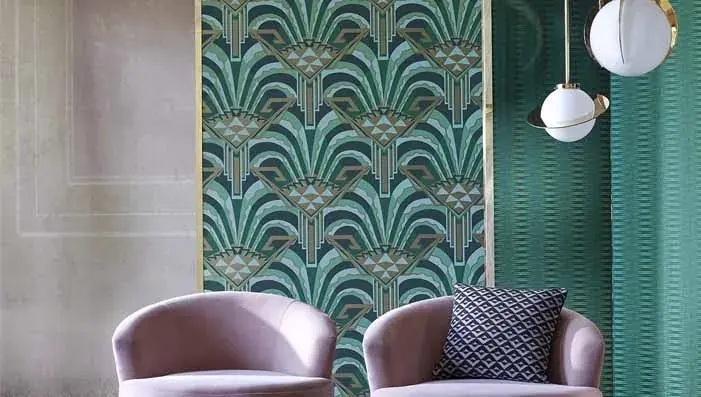

Get A Quote


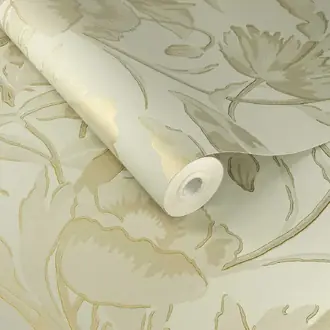
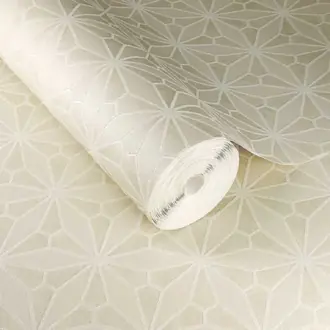
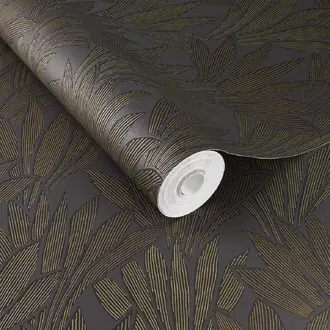
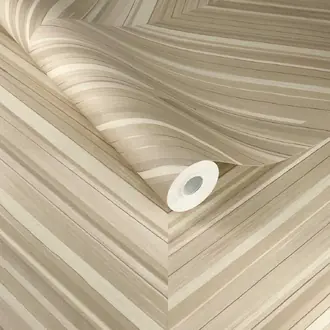
Geometry, glamour and decorative craftsmanship
What Makes a Wallpaper Art Deco?
Art Deco wallpaper draws on the confident decorative language of the 1920s and 1930s. Symmetry, stepped forms, fans, arches, sunbursts and stylised florals give the pattern its structure, while metallic detail and deep colour create the polished sense of glamour associated with the period.
Not every geometric wallpaper is Art Deco. Authentic Deco-inspired designs normally combine ordered repetition with recognisable architectural or ornamental motifs. Contemporary interpretations may simplify those forms or recreate them in cork, wood veneer, embroidery, metallic foil and other tactile wallcovering finishes.
Architectural geometry
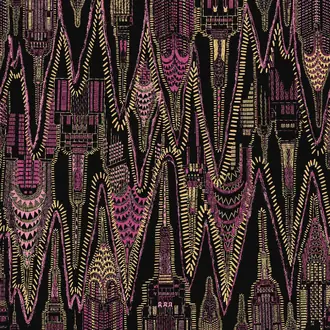
Arches, chevrons, stepped outlines and radiating forms echo the façades, ironwork and interiors of landmark Art Deco buildings.
Stylised ornament
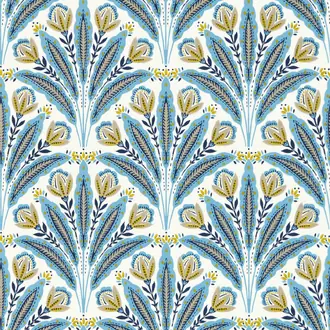
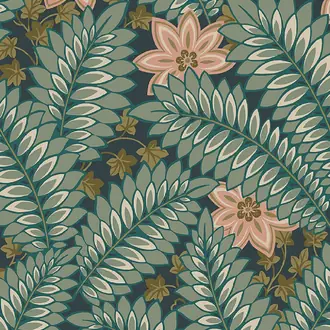
Fans, scallops, palms, lotus leaves and streamlined florals bring a softer decorative rhythm while retaining the movement's symmetry.
Luxurious surfaces
Metallic ink, foil, velvet, embroidery, cork and natural fibres add light, relief and craftsmanship beyond the printed pattern alone.

Fans, scallops and repeating arches
Classic Art Deco Wallpaper Motifs
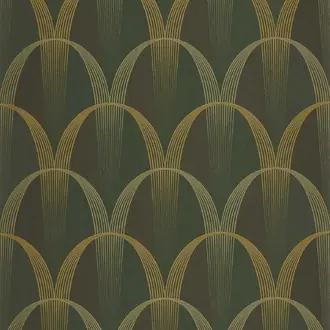
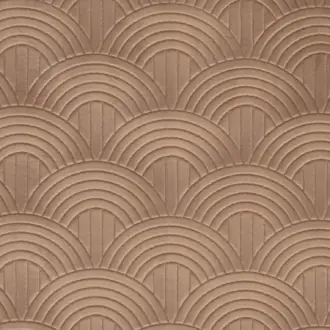
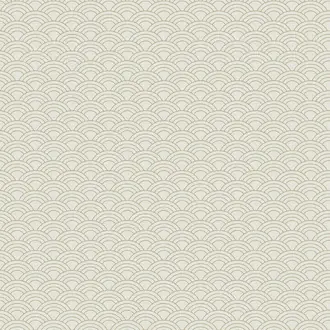
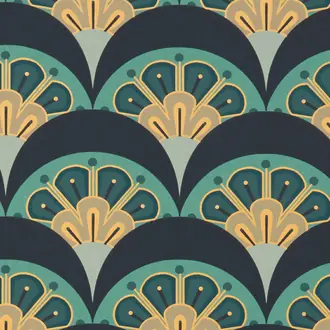
Fan and scallop patterns are among the most recognisable forms in Art Deco wallpaper. Their repeated curves create an ordered rhythm, often sharpened by fine outlines, contrasting grounds or metallic accents.
Other characteristic motifs include sunbursts, stepped diamonds, overlapping circles and stylised palm or lotus forms. Designs with a smaller repeat can work across an entire room; larger fans and emphatic geometry create a stronger focal wall.
Zoffany Conway demonstrates how an archive-inspired geometric can feel both glamorous and composed, using layered curves and a controlled palette rather than relying on ornament alone.

Symmetry, movement and optical depth
Geometric Art Deco Wallpaper
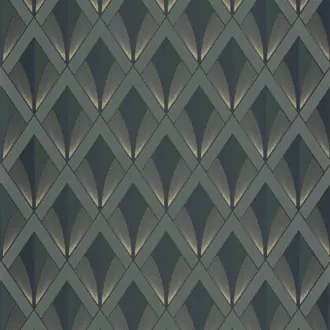
Geometric Art Deco wallpaper is distinguished by discipline as much as drama. Cubes, diamonds, interlocking curves and linear repeats are arranged with clear symmetry, producing movement without the freer shapes associated with later retro patterns.
Contrast changes the effect considerably. Black, cream and gold create a crisp architectural statement, while tonal neutrals make the same geometry easier to use throughout a room. Metallic elements can emphasise selected lines and allow the repeat to shift gently as the light changes.
Cole & Son Mosaic draws on the symmetry and mosaics of the Art Deco period, giving its compact cube pattern a sense of depth that remains precise rather than overpowering.

Embroidery, metallics and dimensional surfaces
Luxury Art Deco Wallcoverings
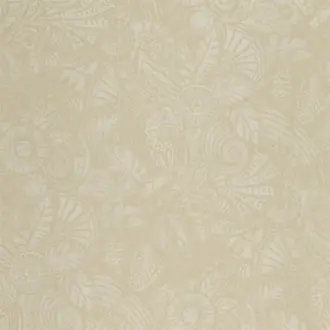
At the most luxurious end of the collection, the Art Deco effect may be created through material and construction as well as pattern. Embroidered grounds, hand-laid natural fibres, cork, wood veneer, metallic leaf and raised finishes bring relief and variation that cannot be conveyed by colour alone.
These surfaces respond to their surroundings. Metallic details catch direct and evening light, while velvet and textile finishes absorb it for a softer effect. Natural materials may contain subtle variations that form part of their character rather than appearing completely uniform.
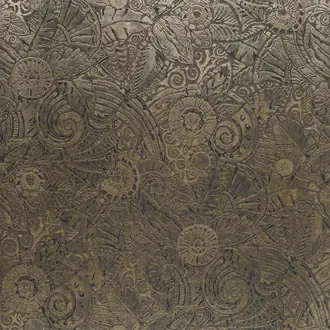
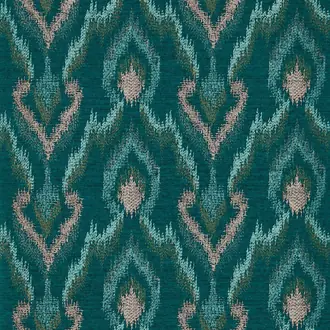
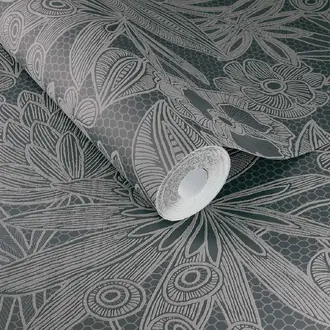
Arte Filigrana interprets fine filigree work through embroidery, combining architectural repetition with the tactile finish expected from a specialist designer wallcovering.

Period influence without a themed interior
Using Art Deco Wallpaper in Contemporary Rooms
An Art Deco wallpaper does not require every element of the room to reproduce the 1920s. A restrained scallop, tonal arch or finely drawn geometric can sit comfortably with contemporary furniture, simple joinery and natural materials.
Choose the scale according to the available wall. Compact repeats are adaptable around doors, windows and pictures, while large motifs benefit from a clearer surface where their symmetry can be read. Deep green, navy and black feel dramatic; cream, soft metallics and muted colourways provide a quieter interpretation.
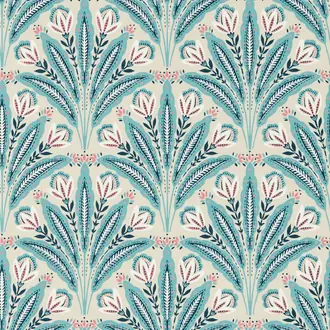
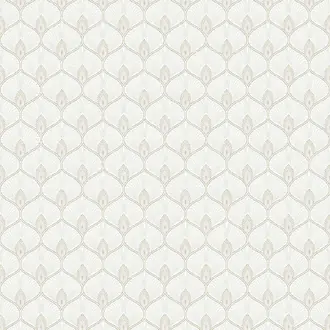
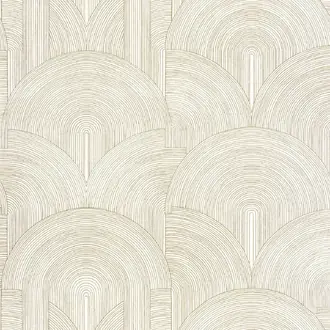
Anna French Seton Scallop shows how a recognisable period form can be softened through detailed linework and a balanced repeat, making it suitable for more than a single statement wall.
Choosing with confidence
Consider Pattern Scale, Finish and Light
Room photography reveals the overall effect, but the repeat dimensions and physical sample explain how the design will behave on your own wall.
Read the complete repeat
Check the repeat dimensions and view enough width to understand the full geometry. A small sample may contain only one curve or part of a larger fan.
Test reflective finishes
Move metallic, foil and glass-bead samples between daylight and evening light. Their contrast and sheen can change significantly with the viewing angle.
Plan the starting point
On a focal wall, centre the most recognisable part of a large motif where appropriate. Allow for trimming and pattern matching when calculating quantities.

Samples and specialist finishes
See the Colour, Relief and Metallic Detail at Home
A sample lets you assess the true ground colour, print definition, texture and reflectivity alongside your fabrics, paint, flooring and furniture. This is especially important for gold, bronze, pearlescent and deeply textured wallcoverings.
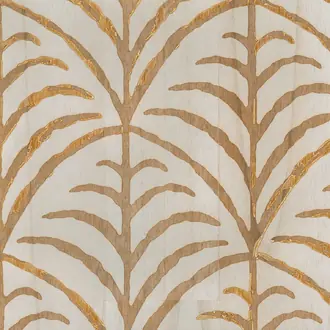
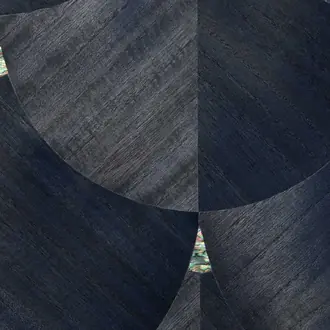
For handcrafted products such as Thibaut Deco Moon, the material and hand-laid finish are integral to the design. Use the sample to understand the surface, then consult the room image and full technical details to judge the complete scale.
Continue browsing
Related Designer Wallpaper
Frequently asked questions
Art Deco Wallpaper FAQs
What is Art Deco wallpaper?
Art Deco wallpaper uses the ordered geometry and stylised ornament associated with 1920s and 1930s design. Common features include fans, scallops, arches, sunbursts, stepped forms, metallic detail and symmetrical floral or palm motifs.
What is the difference between Art Deco and geometric wallpaper?
Geometric wallpaper is the broader category and includes patterns from many periods and styles. Art Deco wallpaper normally uses recognisable period forms, architectural symmetry or streamlined ornament rather than geometry alone.
What is the difference between Art Deco and Art Nouveau wallpaper?
Art Nouveau generally favours flowing, organic lines inspired by stems, flowers and natural forms. Art Deco is typically more symmetrical, architectural and streamlined, although stylised plants and flowers can appear in both styles.
Which colours are associated with Art Deco wallpaper?
Black, gold, emerald, teal and navy create the most dramatic interpretation, but Art Deco patterns also work in cream, silver, blush and tonal neutrals. Motif, symmetry and finish are more important than any single colour palette.
Can Art Deco wallpaper work throughout a room?
Yes. Smaller repeats, tonal colourways and restrained metallic details can work across several walls. Large-scale fans, strong contrasts and heavily reflective finishes usually create a more pronounced effect and need careful consideration of scale and light.
Should I order an Art Deco wallpaper sample?
Yes, particularly for metallic, velvet, embroidered, cork, wood or hand-finished wallcoverings. A sample shows the true colour, surface and reflectivity, while the full repeat and room photography show the overall pattern scale.