





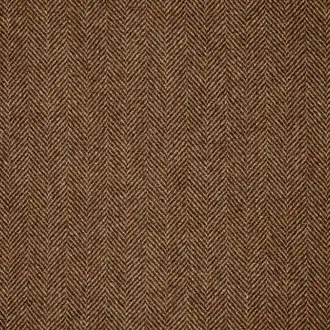


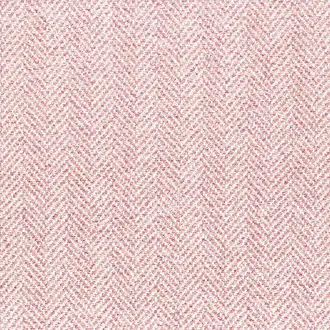


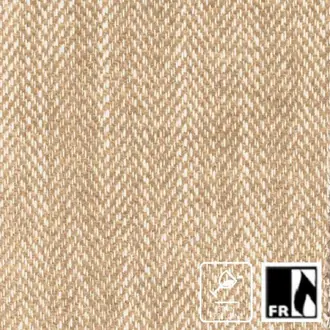


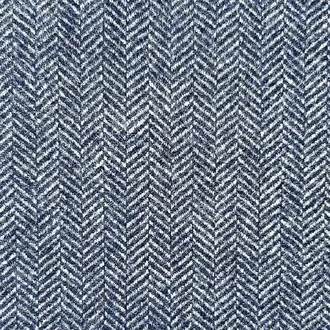












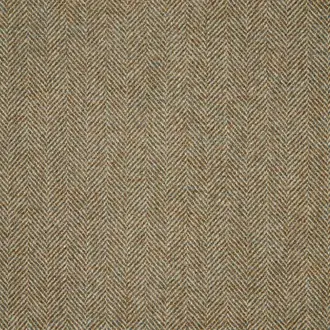


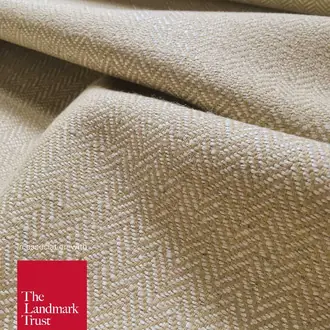
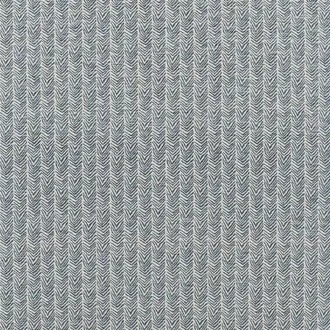


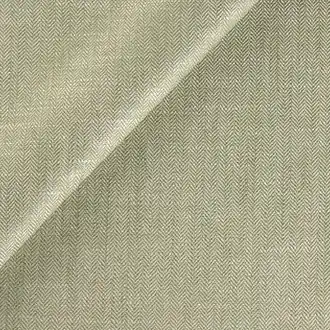


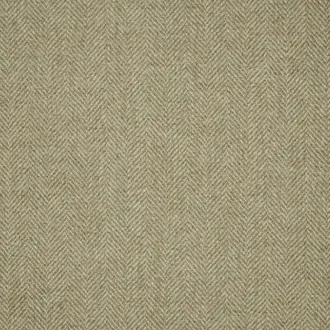


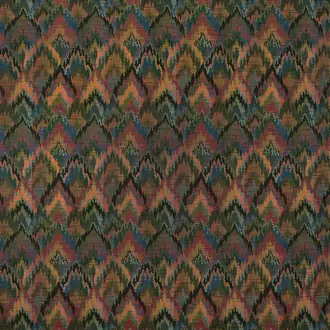

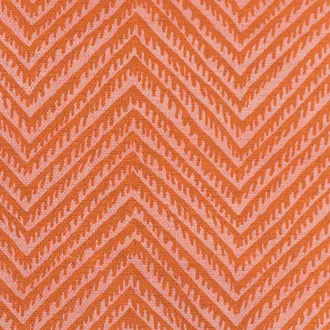


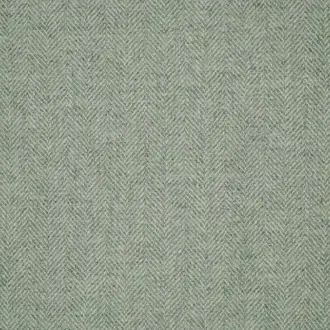





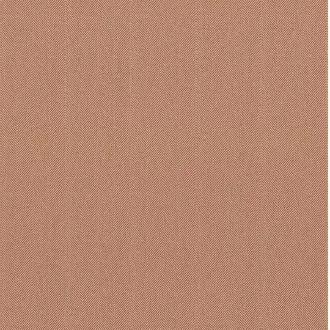





Fine herringbone
A small tailoring-scale weave gives upholstery, cushions and blinds subtle movement without dominating the scheme.

No products matched “”.
No matches for “”.
 1722 reviews
Explore designer herringbone fabric for upholstery, curtains, blinds, cushions and headboards. From fine tailoring-scale weaves to bolder broken zigzags, herringbone introduces direction, texture and understated pattern.
Compare wool, cotton, linen-blend and performance qualities in colours ranging from quiet neutrals to stronger blues and warm tones. Order samples to assess the weave, scale, handle and colour in your own room, and check each product’s recommended use before ordering.
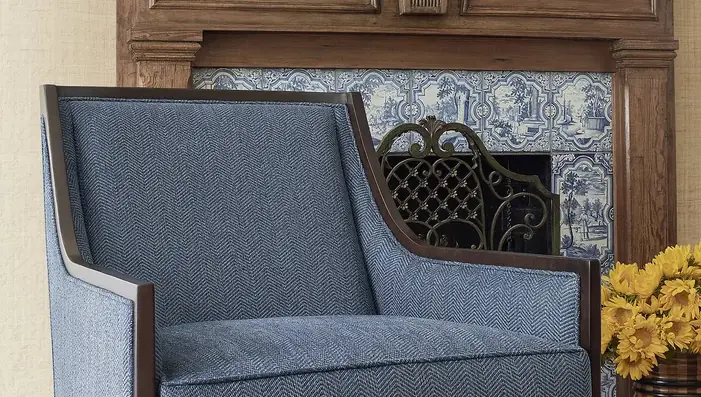

A distinctive broken weave
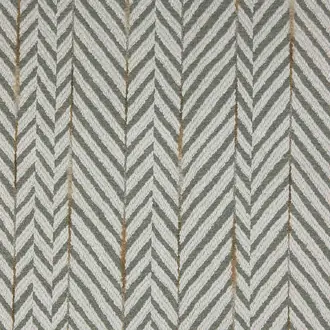
Herringbone is formed by short diagonal lines that reverse direction to create a repeated V-shaped structure. Unlike a continuous chevron, the lines are offset at the join, producing the characteristic broken zigzag associated with traditional tailoring and woven textiles.
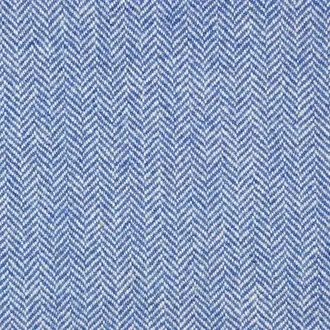
The pattern may be crisp and clearly defined or softened by colour, yarn and texture. This makes herringbone unusually versatile: it can read as a quiet semi-plain from across a room while adding depth and movement at closer range.
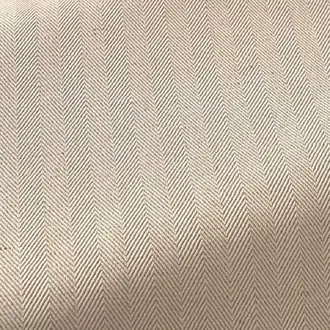
A small tailoring-scale weave gives upholstery, cushions and blinds subtle movement without dominating the scheme.
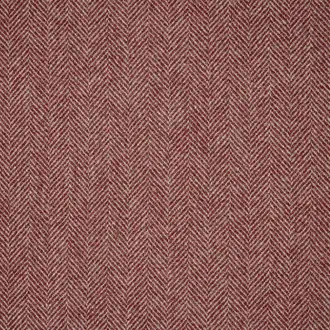
Heathered yarns, wool and boucle-like surfaces soften the geometry and emphasise the tactile character of the cloth.
A broader repeat makes the broken zigzag more visible and gives larger furniture or full-length curtains stronger rhythm.

Furniture and scale
Herringbone is particularly effective on armchairs, sofas, stools and headboards because its directional weave gives a plain-coloured surface added structure. Fine patterns feel tailored and restrained, while a larger scale makes the geometry a stronger part of the furniture.
Choose a fabric whose specification explicitly includes upholstery and check its abrasion, care and fire-treatment information. Your upholsterer should confirm suitability and calculate quantity before work begins.

Pattern with restraint
When the yarn colours sit close together, herringbone behaves much like a semi-plain. The broken weave is visible nearby but settles into a softly textured field from a distance, making it easy to layer with florals, checks, stripes and stronger motifs.
Neutral, stone and grey colourways emphasise texture; contrasting yarns reveal the geometry more clearly. View samples both close up and from the other side of the room before deciding how prominent you want the pattern to feel.

Direction, joins and tailoring
Because herringbone has a clear direction, careful cutting makes a visible difference. On upholstered furniture, the weave can be centred on a chair back, aligned along seat cushions and balanced across paired arms.
Piping and seams create natural stopping points, but adjoining panels still need a considered layout. Discuss pattern direction and matching with your upholsterer before the fabric is cut, particularly on broad or high-contrast designs.

Texture in flowing folds
At a window, herringbone adds quiet movement without the visual weight of a bold print. A soft, fluid cloth creates relaxed folds, while a denser wool or structured weave gives curtains a more tailored presence.
Check the product’s recommended use, usable width and repeat before calculating quantity. Samples are especially important because daylight can reveal the contrast between yarns more strongly than indoor lighting.

Weave and surface
Herringbone is commonly woven rather than printed, so the pattern and texture are created together. Fine yarns produce a smooth, precise effect; thicker or irregular yarns make the structure more tactile and relaxed.
Fibre content also shapes the handle. Wool can feel warm and softly tailored, cotton often appears cleaner and lighter, while blended performance qualities may offer greater practicality for demanding upholstery.

Know the difference
Both patterns use diagonal lines, but their joins differ. Herringbone’s segments are offset to form a broken zigzag; chevron diagonals meet point to point in a continuous V. The distinction is easiest to see in a full-width image rather than a small swatch.
Chevron generally feels more graphic, while herringbone often reads as woven texture. Product naming can vary, so use the image and specification to confirm the effect you want.

Colour and character
Low-contrast herringbone gives a room depth without obvious pattern, while two clearly different yarn colours sharpen every change of direction. Blue and grey feel tailored and versatile; warmer rust, oat and olive tones emphasise the weave’s natural character.
Use a physical sample to compare the fabric with paint, flooring and neighbouring textiles. Mixed yarns can shift noticeably as the light changes, which is part of their appeal but difficult to judge from a screen alone.
Specify with confidence
A sample lets you assess the true colour, texture, weight and scale of the weave in your own light. Check it against the finished application and consult the product specification for composition, width, care and recommended use before ordering your full quantity.
Continue browsing
Frequently asked questions
Herringbone fabric has short diagonal lines that reverse direction in an offset arrangement, creating a repeated broken zigzag. The design is normally formed through the weave itself.
No. Herringbone segments are offset where they reverse, while chevron lines meet point to point to form a continuous V. Herringbone usually has a more textural, tailored appearance.
Many herringbone fabrics are suitable for upholstery, but suitability depends on the individual product. Check its recommended use and performance information, and ask your upholsterer to confirm it for the intended furniture.
Yes, where the product specification includes curtains. Lighter qualities create softer folds, while heavier woven cloths produce a more structured, tailored treatment.
The directional weave should be planned across seams and joined widths. Matching requirements vary with the scale and contrast, so allow your curtain maker or upholsterer to calculate the quantity.
A sample shows the actual yarn colours, surface texture, scale and handle. These details can change considerably with lighting and are difficult to judge accurately from a product image alone.
Prices and taxes are calculated based on your country.
Some items may not be available for delivery to every country — we will tell you at the basket or checkout if anything cannot be sent.
Necessary cookies enable core functionality such as page navigation, your shopping basket and secure checkout. The site cannot work properly without them.
| Cookie | Provider | Duration |
|---|---|---|
| __cf_bm | Cloudflare | 30 minutes |
| cf_clearance | Cloudflare | Varies |
| ect_consent | First party | 180 days |
| ectcartcookie | First party | Session |
| ecthash | First party | Session |
| ectordid | First party | Session |
| ectsessid | First party | Session |
| PHPSESSID | First party | Session |
Preference cookies let the site remember choices you make (such as your region or recently viewed items) for a more personal experience.
| Cookie | Provider | Duration |
|---|---|---|
| ect_country_popup_shown | First party | 1 day |
| WRITECLL | First party | Persistent |
| WRITECLP | First party | Persistent |
Statistics cookies help us understand how visitors use the site by collecting and reporting information anonymously.
| Cookie | Provider | Duration |
|---|---|---|
| _ga | Google Analytics | 2 years |
| _ga_ | Google Analytics | 2 years |
| _hj | Hotjar (via Google Tag Manager) | 30 minutes - 1 year |
| fs_uid | FullStory (via Google Tag Manager) | 1 year |
Marketing cookies track visitors across sites to display relevant ads and measure campaign performance.
| Cookie | Provider | Duration |
|---|---|---|
| __kla_id | Klaviyo | 2 years |
| _gcl_ | Google Ads (via Google Tag Manager) | 90 days |
| id1 | First party | ~6 months |
| id2 | First party | ~6 months |
| IDE | Google DoubleClick (third-party, doubleclick.net) | 13 months |
| PARTNER | First party | Persistent |