





Traditional crewelwork
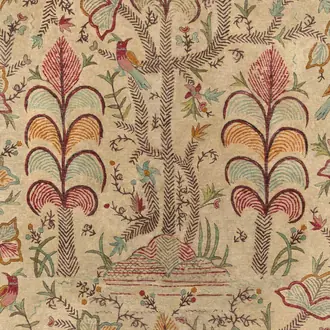
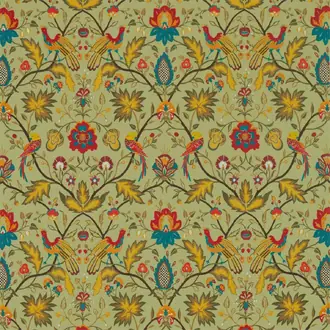
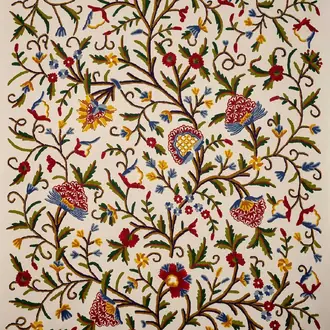
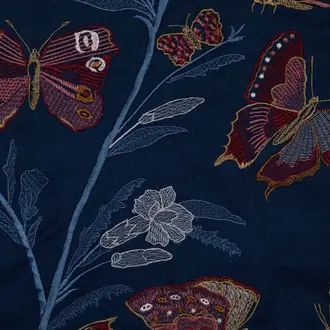
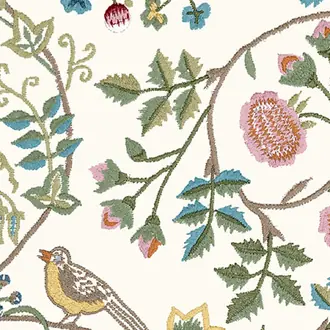
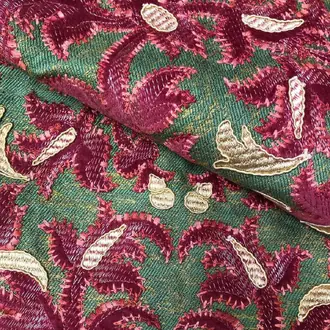
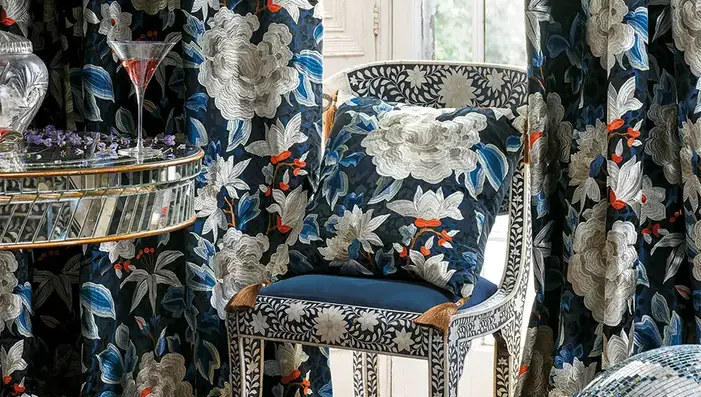
Flowing branches, flowers, leaves and stylised botanical motifs interpreted through raised decorative stitching.

No products matched “”.
No matches for “”.
 1716 reviews
Discover designer crewel and embroidered fabric for curtains, blinds, cushions, headboards and selected upholstery. From traditional floral crewelwork to contemporary geometric and tonal embroidery, these fabrics introduce colour, texture and visible craftsmanship to an interior.
Our collection includes embroidery worked across linen, cotton, silk and blended grounds from leading international fabric houses. Suitability varies between designs, so please check the individual product specification and order a sample before selecting fabric for upholstery or made-to-measure furnishings.

Stitch and construction
Embroidered fabric is created by working decorative threads onto a woven ground. The stitching may form delicate outlines, densely filled botanical motifs, graphic geometrics, abstract marks or softly textured tonal surfaces.
Unlike a pattern that is simply printed onto the cloth, embroidery introduces physical depth. The direction, density and character of the stitching affect how the design responds to light and how it feels when viewed at close range.
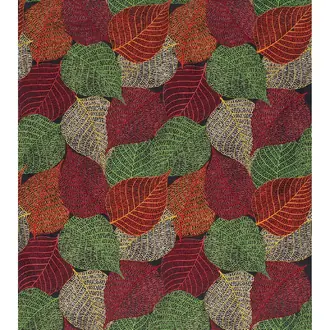
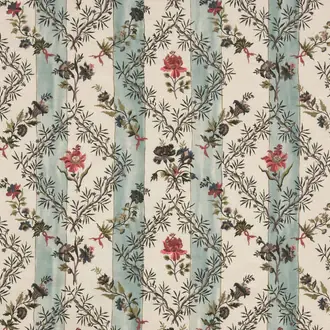
Flowing branches, flowers, leaves and stylised botanical motifs interpreted through raised decorative stitching.
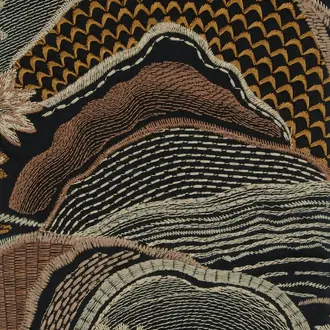
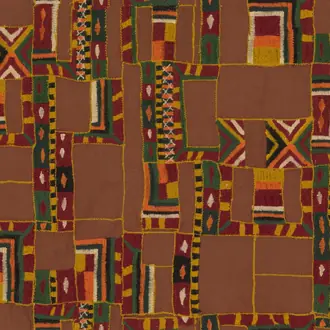
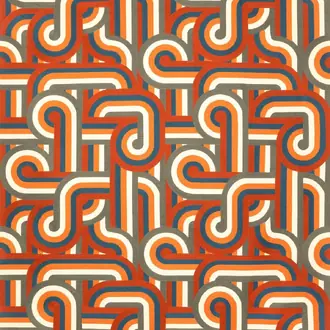
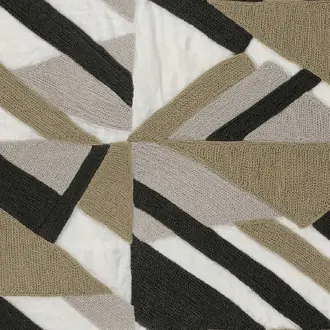
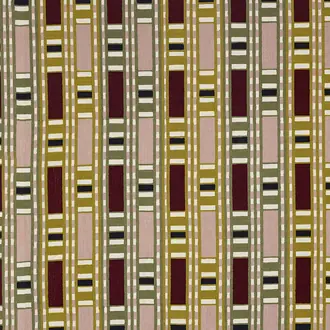
Graphic lines, geometric forms and expressive marks bring the technique into modern decorative schemes.
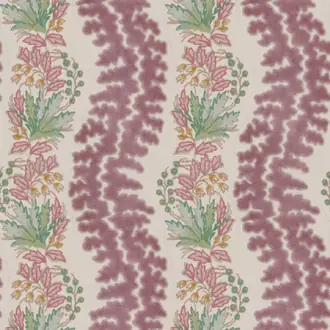
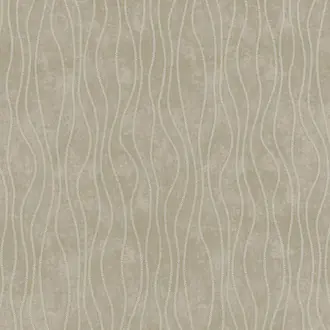
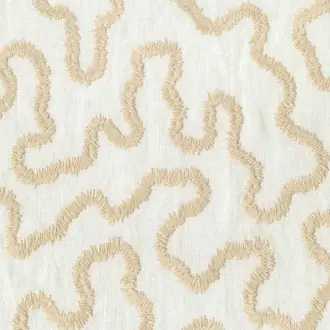
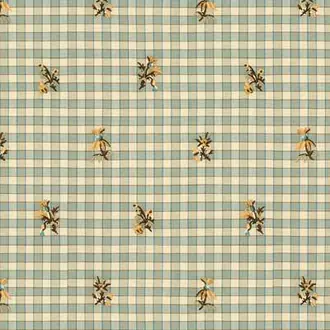
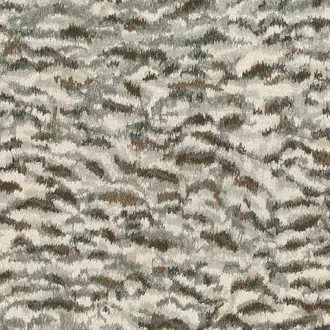
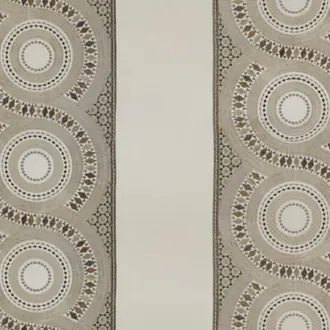
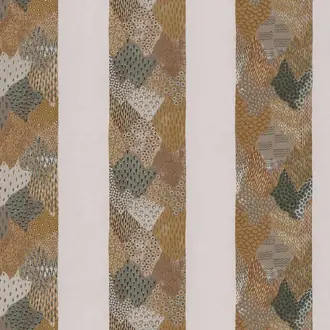
Subtle thread colours and restrained motifs add depth without introducing a strongly contrasting pattern.

Windows and drapery
Full-length curtains provide space for larger embroidered repeats to be appreciated across a generous expanse of cloth. Traditional floral designs can create a decorative focal point, while tonal and geometric embroidery introduces quieter surface detail.
Roman blinds present the design relatively flat, making them particularly effective for clearly defined motifs. Check the usable width, pattern repeat, match, weight and recommended use before calculating the required quantity.
Embroidery can affect the weight, drape and reverse appearance of a fabric. An appropriate lining can protect the reverse, improve body and reduce exposure to strong sunlight.

Traditional technique
Crewelwork is a form of surface embroidery traditionally associated with wool yarn stitched onto a firm woven ground. It is particularly recognised for flowing stems, leaves, flowers, trees and other stylised botanical motifs.
Modern crewel fabric is not limited to traditional interiors. Designers reinterpret the technique using simplified forms, enlarged motifs, contemporary colours and unexpected combinations of yarn and ground cloth.
The word “crewel” describes an embroidery tradition rather than guaranteeing one precise composition. The ground cloth and decorative yarns may contain wool, linen, cotton, viscose, silk, synthetic fibres or a blend. Check the composition of the individual product before ordering.

Pattern and colour
Contemporary embroidery can be graphic, architectural or deliberately irregular. Contrasting threads create expressive lines and blocks of colour, while tonal stitching produces quieter relief and shadow.
Some designs combine embroidery with printing, appliqué, jacquard weaving or decorative yarns. These mixed techniques create surfaces that can appear quite different as the light changes throughout the day.
Consider the complete repeat as well as the sample. A small cutting is useful for assessing the thread colours and ground cloth but may only reveal one part of a large-scale composition.

Furniture and suitability
Some embroidered fabrics are suitable for decorative or general domestic upholstery, while others are intended only for curtains, blinds and cushions. The presence of embroidery does not by itself determine durability.
For furniture, confirm the manufacturer’s recommended usage and review the construction, composition, abrasion performance and care information. Consider how raised or exposed threads will respond to friction, pets, children and frequent use.
A decorative chair, occasional stool or headboard places different demands on a fabric than a heavily used family sofa. Contact us if you would like help checking a particular product before ordering.

Scale and placement
Headboards, cushions and occasional furniture offer opportunities to introduce concentrated pattern and tactile detail. A headboard can accommodate a substantial motif, while a cushion may isolate one carefully selected section of the design.
Pattern placement should be considered before cutting. Large motifs, directional designs and irregular repeats may require additional fabric to achieve a balanced result or coordinate several finished pieces.
Where a design includes heavily raised stitching, piping, seams and frequently handled edges should be planned carefully. The individual product specification remains the starting point for deciding whether the fabric is suitable.
Specify with confidence
A sample allows you to examine the actual thread colours, raised surface, ground cloth, weight and handle in the intended room. View it in both daylight and artificial light, and consider how the embroidery will appear in folds if it is being selected for curtains.
For large-scale designs, use the sample alongside the complete pattern image and published repeat. A sample may show the materials and stitching clearly without containing the entire motif.
Continue browsing
Frequently asked questions
Embroidery is the broader category of decorative stitching applied to a base cloth. Crewelwork is a particular embroidery tradition historically associated with wool yarn and flowing botanical motifs. Contemporary crewel fabrics may use modern colours, compositions and interpretations.
Many embroidered fabrics are designed for curtains and decorative window treatments. Confirm the recommended use, weight, width, repeat and care instructions for the individual design.
Only use an embroidered fabric for upholstery when the individual specification recommends it. Check its construction, abrasion performance and intended level of use rather than relying on appearance alone.
No. Crewelwork is traditionally associated with wool embroidery, but the complete fabric may have a linen, cotton or blended ground and may use a mixture of decorative yarns. Check the published composition for the exact product.
The stitching itself does not automatically increase the quantity, but a large repeat, directional pattern or carefully positioned motif can create additional cutting and matching requirements.
Care requirements depend on the ground cloth, decorative yarns, dyes and construction. Do not assume an embroidered fabric is washable; follow the manufacturer’s instructions for the individual product.
Embroidery is tactile and can change visibly as light falls across the raised threads. A sample is the best way to assess the true colours, ground cloth, texture and handle before ordering.
Prices and taxes are calculated based on your country.
Some items may not be available for delivery to every country — we will tell you at the basket or checkout if anything cannot be sent.
Necessary cookies enable core functionality such as page navigation, your shopping basket and secure checkout. The site cannot work properly without them.
| Cookie | Provider | Duration |
|---|---|---|
| __cf_bm | Cloudflare | 30 minutes |
| cf_clearance | Cloudflare | Varies |
| ect_consent | First party | 180 days |
| ectcartcookie | First party | Session |
| ecthash | First party | Session |
| ectordid | First party | Session |
| ectsessid | First party | Session |
| PHPSESSID | First party | Session |
Preference cookies let the site remember choices you make (such as your region or recently viewed items) for a more personal experience.
| Cookie | Provider | Duration |
|---|---|---|
| ect_country_popup_shown | First party | 1 day |
| WRITECLL | First party | Persistent |
| WRITECLP | First party | Persistent |
Statistics cookies help us understand how visitors use the site by collecting and reporting information anonymously.
| Cookie | Provider | Duration |
|---|---|---|
| _ga | Google Analytics | 2 years |
| _ga_ | Google Analytics | 2 years |
| _hj | Hotjar (via Google Tag Manager) | 30 minutes - 1 year |
| fs_uid | FullStory (via Google Tag Manager) | 1 year |
Marketing cookies track visitors across sites to display relevant ads and measure campaign performance.
| Cookie | Provider | Duration |
|---|---|---|
| __kla_id | Klaviyo | 2 years |
| _gcl_ | Google Ads (via Google Tag Manager) | 90 days |
| id1 | First party | ~6 months |
| id2 | First party | ~6 months |
| IDE | Google DoubleClick (third-party, doubleclick.net) | 13 months |
| PARTNER | First party | Persistent |