



Paisley Wallpaper
Paisley wallpaper reimagines the distinctive curved motif through intricate heritage repeats, botanical decoration, dramatic oversized patterns and contemporary colour. Explore designs ranging from Indian shawl-inspired ornament and traditional florals to modern, flocked and textured paisley wallpaper.


Get A Quote

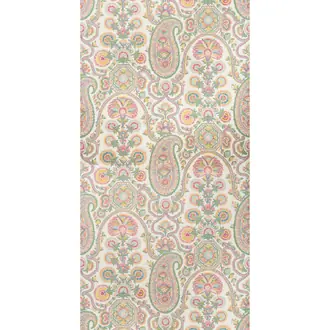


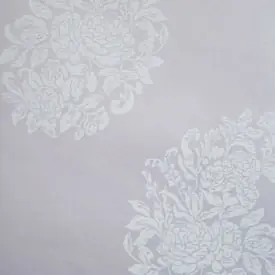

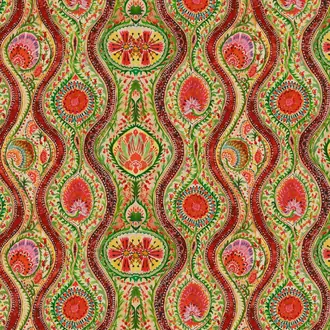
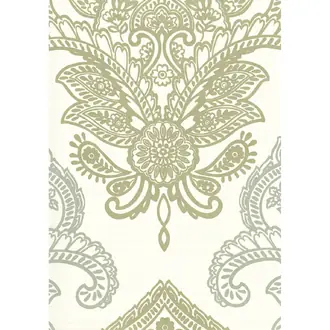
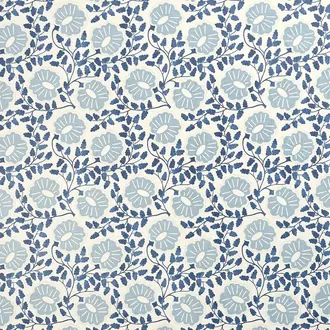


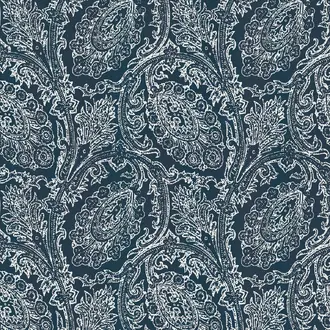


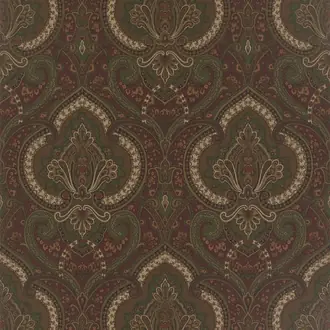
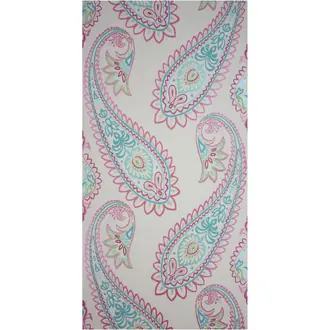


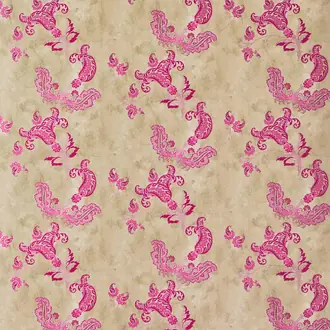
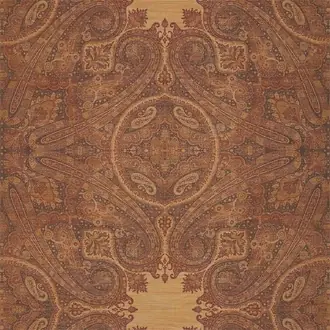
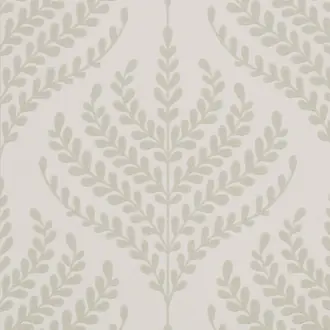


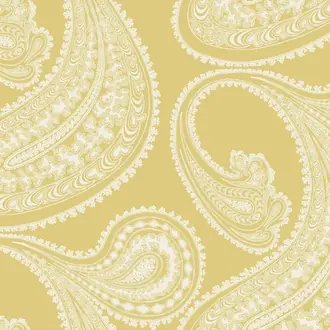

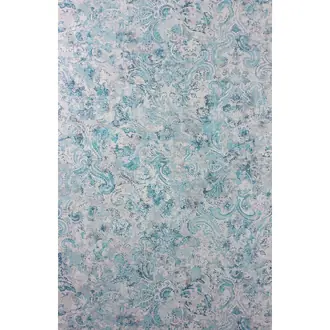


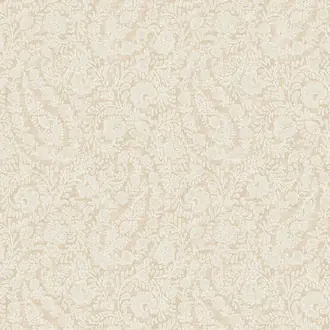


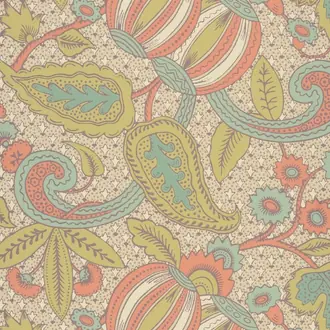


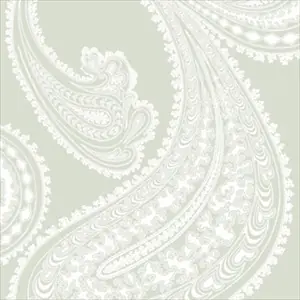
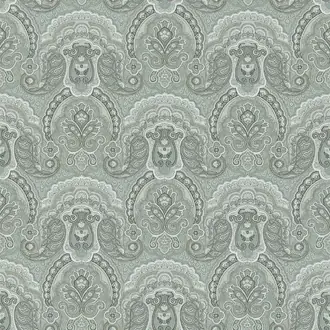


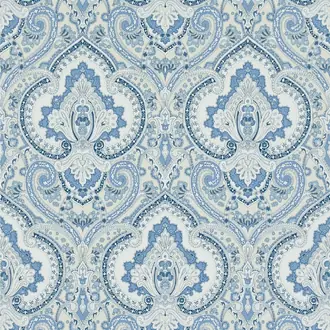
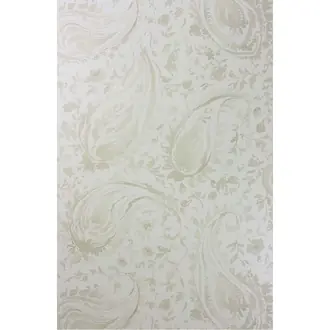


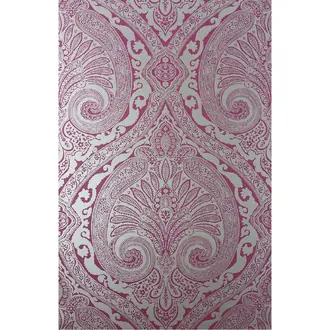


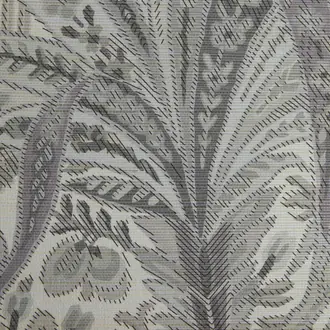


Curved form and intricate ornament
What Is Paisley Wallpaper?
Paisley wallpaper is built around a distinctive curved, tapering motif often described as a droplet, leaf, feather or pine cone. The form may be filled with flowers and fine linework, repeated in an orderly arrangement or enlarged until it becomes an expressive feature across the wall.
Its character changes considerably with scale, colour and surface. Closely spaced motifs can behave almost like texture, while oversized paisley, metallic printing and raised flock create a much stronger decorative statement.
The curved motif
The recognisable tapering form—often called a boteh—gives varied traditional, botanical and abstract interpretations a shared structure.
Pattern scale
Small repeats produce a detailed rhythm; large paisley exposes the internal drawing and becomes a dominant part of the interior.
Colour and surface
Printed linework, metallic highlights, woven effects and flock can make the same basic motif feel relaxed, tailored or opulent.

From shawl motif to wallpaper pattern
Where Does the Paisley Pattern Come From?
The motif has a long and complex history connected with Persian ornament and the richly decorated shawls of Kashmir and India. These textiles reached Europe through trade and became highly fashionable from the late eighteenth century.
British manufacturers produced their own interpretations, and the Scottish town of Paisley became especially associated with woven shawls carrying the curved design. The town did not invent the motif, but its name became the familiar Western term for it.
On wallpaper, the shape may remain clearly defined or merge with flowers, leaves, feathers and scrolling stems. Looking at the complete repeat helps distinguish a true paisley composition from a general floral, damask or Indian-inspired pattern.

Intricate repeat and textile character
Traditional and Indian-Inspired Paisley Wallpaper
Traditional paisley often recalls the complexity of woven or printed textiles. The curved motifs may be densely filled with small flowers, leaves and fine decorative marks, then arranged in a balanced all-over repeat.
Black, indigo, madder red, ochre and earthy green reinforce the historic character, while cream or parchment grounds make intricate linework easier to read. These patterns work naturally with timber, leather, linen and painted joinery.
An all-over paisley can be used throughout a dining room, bedroom, hallway or study. If the design is detailed, combine it with plains, checks or narrow stripes rather than another pattern with equally complex ornament.

Flowers, leaves and decorative fronds
Floral and Botanical Paisley Wallpaper
Many paisley designs build the curved outline from floral sprigs, fern-like fronds and scrolling leaves. This softens the geometry of the motif while retaining its recognisable taper and direction.
Blue-green, robin’s egg, sage and muted rose palettes give botanical paisley a lighter character than dark heritage colourways. From a distance, a fine repeat may read as a softly patterned background; closer inspection reveals the individual flowers and internal detail.
Use the wallpaper’s ground colour to guide paint and larger pieces of upholstery. A secondary flower or leaf colour can then be repeated in cushions or smaller accessories without recreating the entire pattern elsewhere.

Simplified form and contemporary colour
Modern Paisley Wallpaper
Modern paisley may simplify the internal ornament, loosen the drawing or reduce the motif to an abstract curved mark. Cleaner spacing and restrained colour allow the historic shape to sit comfortably with contemporary furniture.
Small tonal designs introduce movement without dominating a room. At the other extreme, oversized paisley turns each curved form into a piece of graphic artwork and benefits from enough uninterrupted wall area for the scale to remain clear.
Grey, mineral blue and neutral colourways make the pattern easier to use across a complete room. Stronger combinations can be treated as a feature, with plain upholstery and simple silhouettes balancing the wall.

Relief, reflection and dramatic scale
Flocked, Metallic and Textured Paisley Wallpaper
Surface can change paisley as much as colour. Flock gives the motif a soft raised finish, while metallic printing catches changing light and can emphasise either the outline or its internal decoration.
Textured and natural grounds soften perfectly printed lines and introduce small variations that become more noticeable at close range. Because photographs cannot fully reproduce touch, sheen or relief, sampling is particularly important for these specialist finishes.
Large flocked paisley has considerable visual weight. It can create an enveloping luxury scheme across a full room or provide a focal wall when neighbouring finishes are quieter.
Choosing the right design
Consider Paisley Scale, Direction and Detail
The familiar motif can appear quiet or highly decorative depending on its spacing and internal ornament. Compare a physical sample with the full repeat and room photography before deciding how the design will behave across your walls.
Small or oversized
Fine, closely repeated motifs can act like texture. Oversized paisley becomes a clear focal point and requires enough visible wall to reveal its shape.
Check the direction
Many paisley motifs lean or flow in one direction. Review the repeat and plan how prominent forms will sit around doors, windows and furniture.
Balance the ornament
Pair intricate paisley with plains, quiet textures, checks or restrained stripes. Vary the scale if another patterned fabric is being introduced.

Samples and selection
Check Paisley Colour, Scale and Surface at Home
A sample helps you judge the true ground colour, contrast and level of detail alongside your flooring, furniture and fabrics. Move it between walls and view it in daylight and artificial light.
A cutting may contain only part of an oversized motif. Compare it with the complete repeat and room-set images, and check the stated dimensions before ordering. Sample availability, size and charges vary by supplier.
Continue browsing
Related Designer Wallpaper
Frequently asked questions
Paisley Wallpaper FAQs
What is the paisley pattern?
Paisley is a decorative pattern based on a curved, tapering motif commonly compared with a droplet, leaf, feather or pine cone. The shape may contain flowers, leaves and intricate linework or be simplified into a cleaner contemporary form.
What is a boteh?
Boteh is a term associated with the curved motif that developed through Persian and South Asian decorative traditions. In British and Western interiors, closely related forms became widely known as paisley.
Was the paisley pattern invented in Scotland?
No. The motif has much older connections with Persian ornament and Kashmiri and Indian shawls. The Scottish town of Paisley became a major producer of shawls inspired by these imported textiles, and its name eventually became attached to the pattern.
What is the difference between paisley and damask wallpaper?
Paisley is identified by its curved tapering motif. Damask normally uses mirrored or symmetrical floral ornament arranged around a vertical axis. Some elaborate wallpapers borrow qualities from both, so the dominant visible structure determines where they fit best.
Can paisley wallpaper work in a modern room?
Yes. Tonal colours, simplified motifs and enlarged abstract versions work particularly well with contemporary furniture. A traditional paisley can also create purposeful contrast when the rest of the room uses restrained shapes and plain fabrics.
Does large paisley wallpaper make a room look smaller?
Not automatically. Large motifs can make a room feel more immersive and may visually simplify a densely detailed pattern. Dark colour and strong contrast add visual weight, so sampling is the best way to judge the combined effect of scale and colour.
What should I check before ordering paisley wallpaper?
Check the repeat dimensions, match type, direction and complete room imagery as well as a physical sample. For flocked, metallic or textured wallpaper, view the sample from several angles because surface and sheen change with the light.