



Chinoiserie Wallpaper
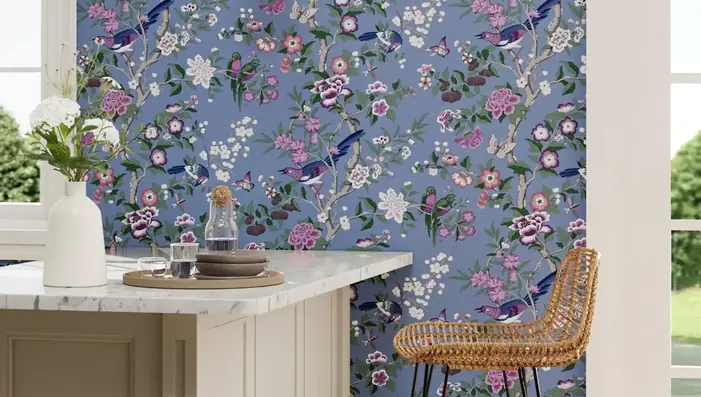
Chinoiserie wallpaper brings imagined gardens, flowering branches, birds and decorative landscapes to the wall. Rooted in the European interpretation of Chinese and wider East Asian art, the style ranges from delicate botanical repeats to richly detailed panoramic murals. Explore traditional and contemporary designs, including graceful bird-and-flower patterns, scenic panels and Japanese-influenced Chinoiserie.

Get A Quote

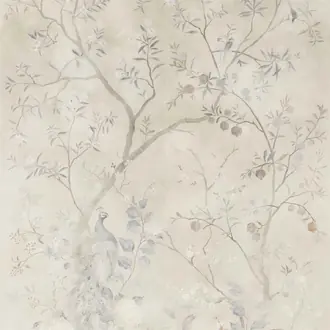
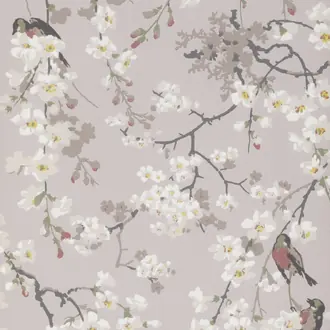
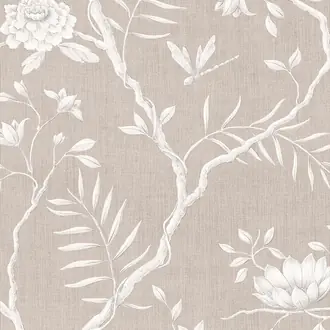
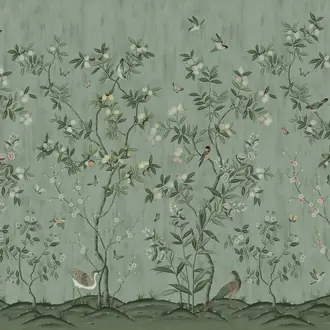

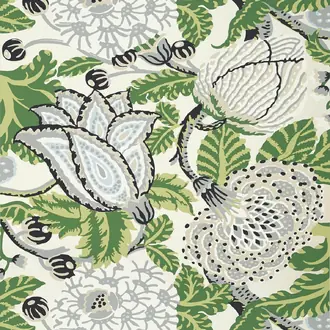
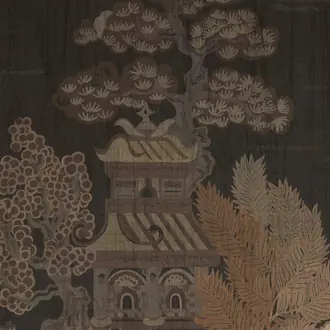
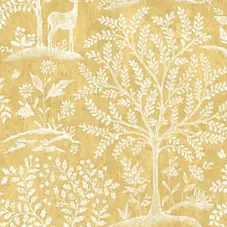
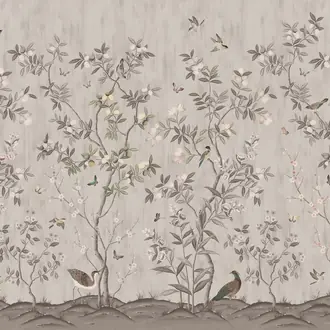
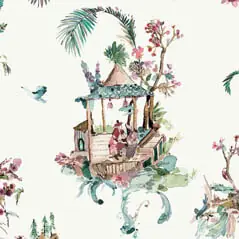
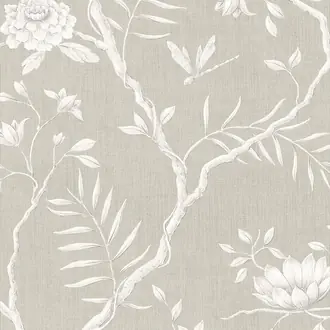
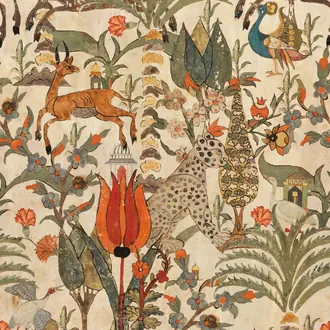
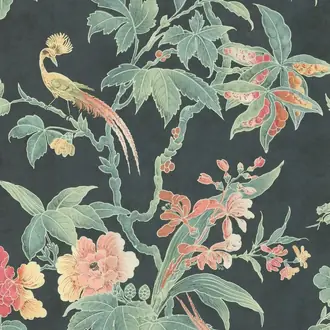
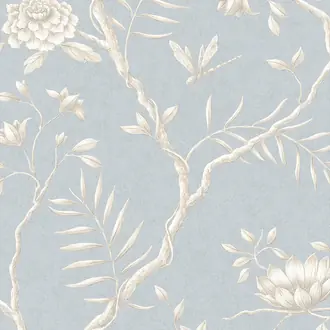
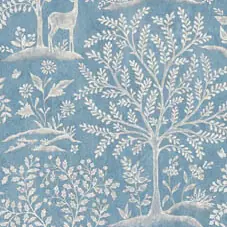
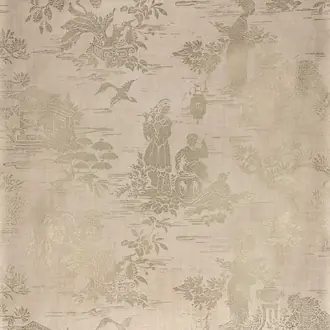
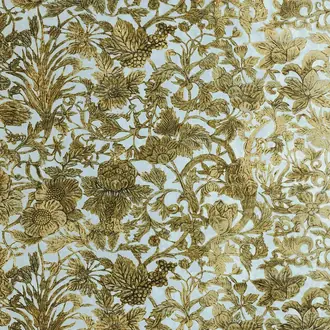
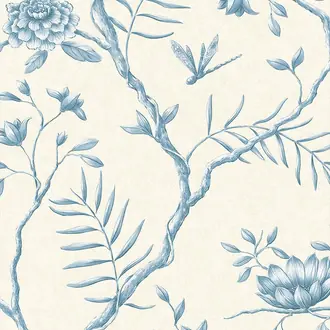
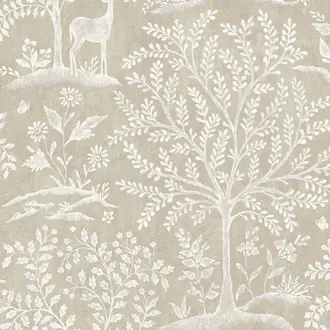
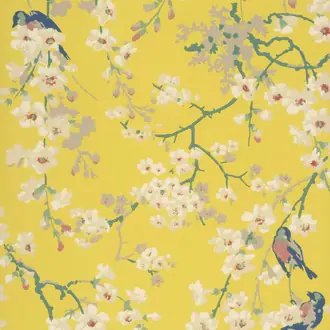
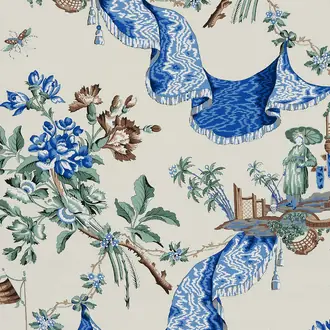
Imagined gardens and decorative storytelling
What Is Chinoiserie Wallpaper?
Chinoiserie is a European decorative style shaped by historic Western interpretations of Chinese and wider East Asian art. It became especially fashionable during the seventeenth and eighteenth centuries, when artists and craftspeople created imagined scenes of distant gardens, architecture, flowers, birds and courtly life.
Chinoiserie wallpaper is therefore decorative fantasy rather than an authentic category of Chinese design. Contemporary collections range from archival scenic panels and painterly murals to lighter botanical repeats that retain the style’s elegance, movement and escapist character.
Scenic gardens
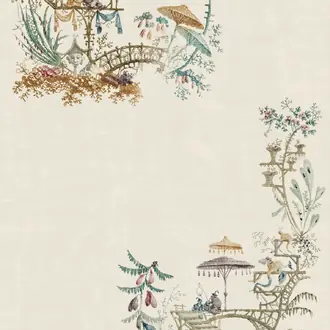
Trees, rocks, water, pavilions and winding landscapes transform the wall into an unfolding decorative scene.
Birds and blossom
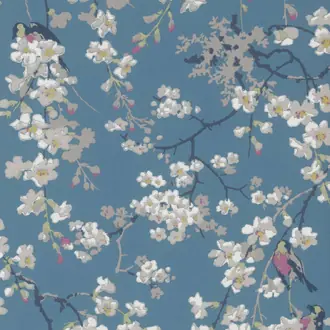
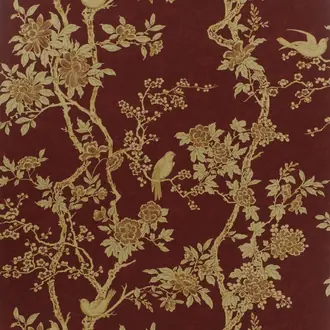
Graceful birds, butterflies and flowering branches bring movement to both delicate repeats and richly layered designs.
Painterly detail
Fine drawing, nuanced colour and occasional metallic accents give the style its crafted and collected quality.

Panoramic gardens and historic character
Traditional Scenic Chinoiserie Wallpaper
Traditional Chinoiserie often builds a complete imagined world across the wall. Trees rise through the composition, birds perch among flowers and garden or architectural details lead the eye from one panel to the next.
These designs feel particularly natural in dining rooms, entrance halls and sitting rooms where enough uninterrupted wall remains visible for the scene to be appreciated. Rich ochre, lacquer red, deep blue and green reinforce the historic mood, while pale grounds make intricate drawing feel lighter.
A mural such as Wild Wisteria in ochre creates the enveloping effect of a painted decorative panel. Check the full mural dimensions and position its principal motifs around doors, windows and furniture before ordering.

Lighter repeats with natural movement
Bird and Floral Chinoiserie Wallpaper
Not every Chinoiserie wallpaper is panoramic. Repeating patterns of blossom, bamboo-like stems, butterflies and decorative birds offer the same lyrical quality in a format that can continue comfortably around several walls.
A dark blue, green or black ground gives pale branches and plumage greater drama. Cream, soft blue and neutral grounds produce an airier effect and allow furniture, pictures and architectural details to remain prominent.
The navy Claire bird-and-branch wallpaper is a strong example of a repeating design with presence. Its quieter colourways offer a softer alternative without losing the detail of the original pattern.

A useful modern design description
What Is Japanese Chinoiserie Wallpaper?
“Japanese Chinoiserie” is a contemporary interiors and retail term rather than a precise historic category. It usually describes a Chinoiserie-style composition with Japanese-leaning imagery such as cranes, blossom, bonsai-like trees, garden scenes, stylised clouds or more open, asymmetric arrangements.
It should not be used as another name for authentic Japanese design. Nor is it exactly the same as Japonisme, the strong influence of Japanese art on Western artists and designers, particularly from the nineteenth century onwards.
For wallpaper selection, the phrase is most useful as a visual description: it helps identify designs that combine Chinoiserie’s imagined landscape with motifs or compositional qualities commonly associated with Japan.

Large-scale artwork for the wall
Chinoiserie Panels and Mural Wallpaper
Panel murals allow branches, birds and garden elements to be drawn at a more natural scale, often with fewer obvious repeats. The result can resemble a hand-painted decorative wall and works beautifully behind a dining table, bed or console.
Some designs are supplied as a fixed set of panels, while others can be extended or ordered to fit a wider wall. Establish whether the artwork repeats, continues or crops before calculating the number of sets required.
Jardin Bloom in white demonstrates how a scenic mural can feel light and architectural rather than visually heavy.

Historic motifs in a quieter setting
Modern Chinoiserie Wallpaper
Contemporary interpretations may simplify the palette, enlarge the spacing or place traditional bird-and-branch imagery within a cleaner composition. Chinoiserie can therefore feel opulent and maximalist, but it can also provide a calm background when the ground colour and furnishings are restrained.
Pale green, stone and softly coloured designs work comfortably with contemporary furniture and plain textiles. Darker grounds or densely layered patterns create a more theatrical focal point and benefit from simpler neighbouring surfaces.
For a balanced scheme, repeat one or two colours from the wallpaper in upholstery, cushions or paint rather than introducing another equally intricate pattern.
Choosing and positioning the design
Consider Scale, Format and Furniture Placement
Review the complete repeat or panel composition rather than judging only a close-up detail. Large scenic designs need enough visible wall to tell their story, while smaller repeats can move more easily around corners and between architectural features.
Repeat or mural
Confirm whether the wallpaper is sold by the roll, as a fixed panel set or to custom dimensions. The format changes both quantity calculations and placement.
Motif position
Plan where important birds, figures, trees and buildings will fall so tall furniture, a headboard or doorway does not conceal the main artwork.
Whole room or feature wall
Fine repeats can create an enveloping scheme across every wall. Panoramic scenes often need one broad, uninterrupted wall to remain legible.

Samples and selection
Check Colour, Detail and Finish at Home
A wallpaper sample reveals the true ground colour, line detail, printed texture and any mica or metallic finish that cannot be judged reliably on screen. View it against furniture, fabrics, flooring and paint in both daylight and evening light.
A sample may show only a small part of a scenic or oversized design. Compare it with the complete repeat and room-set photography, then check the stated width, height, repeat and match before ordering.
Continue browsing
Related Designer Wallpaper
Frequently asked questions
Chinoiserie Wallpaper FAQs
What does Chinoiserie mean?
Chinoiserie describes a European decorative style inspired by historic Western ideas about China and wider East Asia. It is an imaginative interpretation rather than an authentic Chinese design tradition.
Which motifs appear in Chinoiserie wallpaper?
Common motifs include flowering branches, peonies, bamboo-like foliage, birds, butterflies, pagodas, pavilions, rocks, gardens and idealised landscapes.
What is the difference between Chinese wallpaper and Chinoiserie wallpaper?
Chinese wallpaper can refer to wallcoverings genuinely designed or made in China, including historic hand-painted export papers. Chinoiserie describes a broader European decorative style inspired by Western interpretations of East Asian imagery.
What is Japanese Chinoiserie wallpaper?
Japanese Chinoiserie is a modern descriptive term for Chinoiserie-style decoration with Japanese-leaning motifs or composition, such as cranes, blossom and asymmetric garden scenes. It is not another name for authentic Japanese design.
Is Japanese Chinoiserie the same as Japonisme?
No. Japonisme refers more specifically to the influence of Japanese art on Western art and design, especially from the nineteenth century onwards. Japanese Chinoiserie is a looser contemporary interiors description.
Can Chinoiserie wallpaper be used on every wall?
Yes. Fine botanical or bird repeats can work particularly well throughout a complete room. A panoramic mural may be better suited to one uninterrupted wall where its full composition will remain visible.