





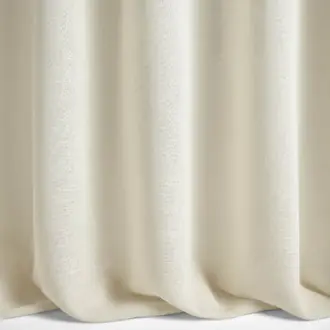
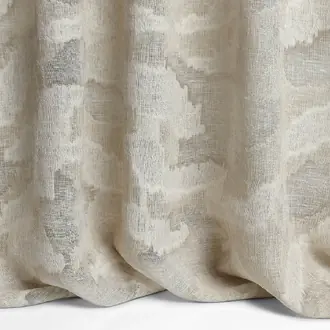

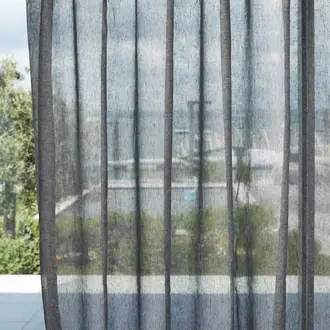
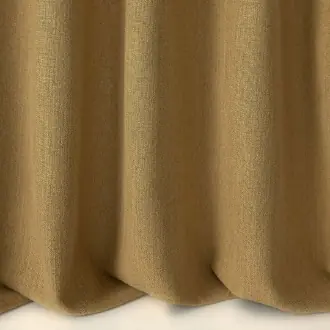





Fewer joins
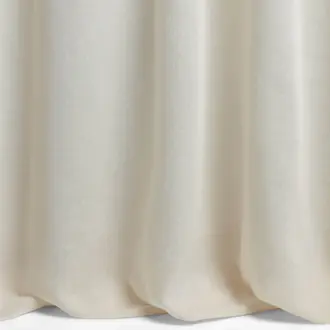
A suitably oriented wide-width fabric can reduce vertical seams across curtains and continuous window treatments.

No products matched “”.
No matches for “”.
 1716 reviews
Explore wide-width fabric for curtains, sheers, Roman blinds and large-scale interiors. Typically woven at around 280–320 cm wide, these fabrics can help reduce joins and create a more continuous finish across tall or expansive windows.
Our collection extends beyond plain voile to include linen, cotton, woven textures, satin, jacquard, embroidery, velvet, dimout, blackout and flame-retardant qualities. Width, pattern direction and intended use vary, so check whether the selected fabric is wide width, railroaded, room high or dual direction before calculating quantity

Width and construction
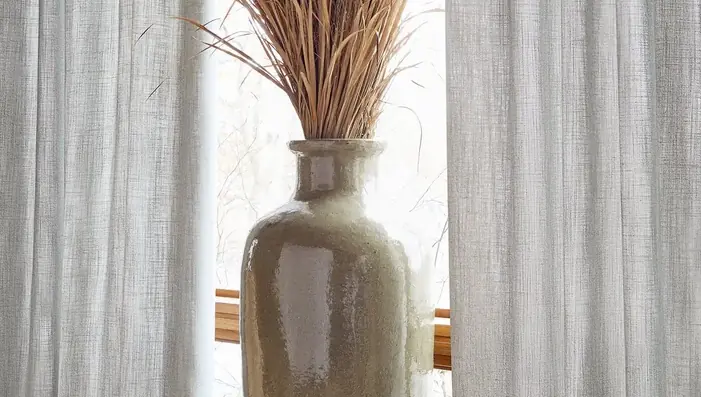
Wide-width fabric is woven substantially wider than conventional furnishing cloth. Standard curtain fabrics are often around 135–150 cm wide, whereas wide-width qualities commonly measure approximately 280–320 cm. The additional width can make it possible to cover a larger area with fewer joins.
Width alone does not explain how a fabric should be used. Pattern direction, the position of the selvedges and whether the product is designated railroaded, room high or dual direction all affect curtain planning and quantity.
A suitably oriented wide-width fabric can reduce vertical seams across curtains and continuous window treatments.
Widths around 280–320 cm are particularly useful for full-height glazing, expansive windows and wall-to-wall sheers.
Usable width, pattern orientation, repeat and making allowances must all work with the proposed finished dimensions.
A practical distinction
These terms are related, but they do not mean exactly the same thing. The illustration provides a simple guide; the individual product specification remains authoritative.

Wide width describes physical width. Railroaded describes a design running from selvedge to selvedge. Room high means the width is intended to form the curtain drop when used from the selvedge. Dual direction indicates that the design may be used either way, subject to the specification.

Continuous window treatments
With room-high fabric, the roll width is used to form the finished drop and the ordered length runs across the window. Where the width accommodates the drop plus hems and heading allowances, this can allow a curtain or sheer to be made without vertical joins.
“Seamless” should not be assumed from width alone. The fabric must be intended for this orientation, and its usable width, finished drop, pattern direction, repeat and workroom allowances must all be checked before ordering.
More than plain voile
Modern collections offer much more than lightweight white sheers. Choose according to privacy, drape, fibre, decorative effect, care and the demands of the finished application.
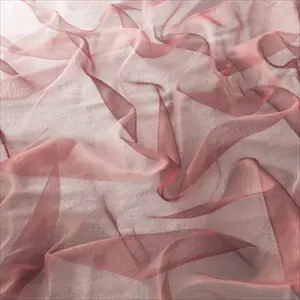
Transparent and semi-transparent qualities soften daylight and suit continuous treatments across large windows.
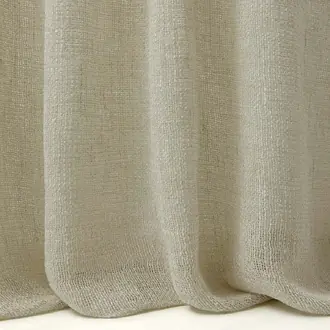
Pure linen, cotton and blended constructions range from open sheers to more substantial, relaxed curtain fabrics.
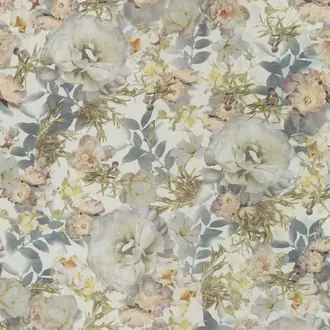
Stripes, jacquards, prints and embroidery offer decorative alternatives, with direction and repeat requiring careful checking.
Selected satin, velvet, chenille and structured weaves provide richer colour, body and light control.
Wide-width light-control fabrics can reduce joins in bedrooms, hotels and media spaces; confirm the stated performance level.
Flame-retardant and Trevira qualities are available for contract and specified interiors, subject to current technical certification.

Light and privacy
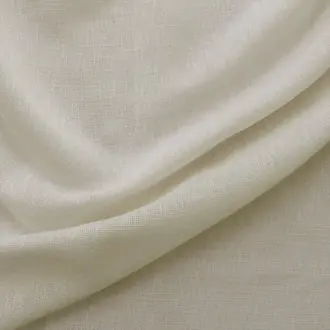
Wide-width sheers can soften glare and provide daytime screening while retaining a sense of openness. Plain, striped, textured, metallic and embroidered designs allow the treatment to be either quiet and architectural or more decorative.
Transparency varies significantly. View a sample against the window in daylight and after dark, and consider whether the sheer will be used alone or layered with lined curtains, blinds or another window treatment.

Natural and textural
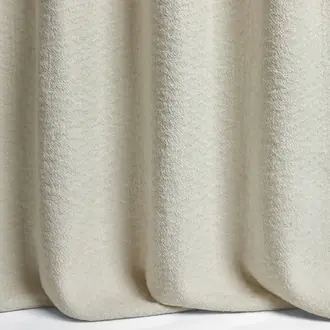
Wide-width linen can create a relaxed, full-length curtain with fewer interruptions to its natural texture. Linen blends may introduce softness, stability, colour or different care characteristics, while heavier woven qualities offer more privacy than an open sheer.
Natural fibres can display slubs and variations that form part of their character. Check composition, usable width, shrinkage and care guidance, and order a sample large enough to understand both texture and transparency.

Pattern and orientation
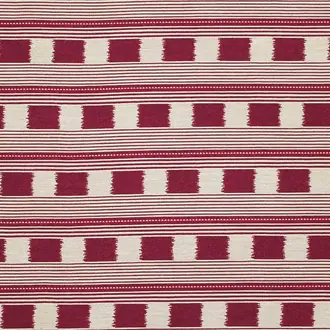
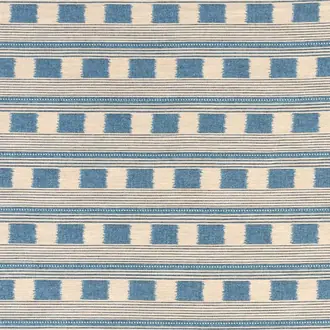
Patterned wide-width collections include stripes, geometrics, jacquards, prints and embroidery. They can introduce scale and detail without relying on multiple standard fabric widths, but the pattern must run correctly for the intended curtain orientation.
Confirm whether the repeat is measured along or across the roll, whether the design is railroaded or dual direction, and how motifs will sit at the heading, hem and edges. A cutting or larger returnable sample can be valuable for ambitious designs.

Specialist interiors
Wide-width performance fabrics can reduce joins while addressing requirements such as flame resistance, washability, acoustic softness, dimout or blackout. They are relevant to hospitality, workspace, healthcare and other contract schemes as well as selected residential interiors.
Terms such as FR, inherently flame retardant, Trevira CS, dimout and blackout describe different properties. Confirm the current certificate, test standard, composition and intended application for the exact product rather than relying on the collection name alone.

Planning and sampling
Begin with the track or pole width, finished curtain drop, heading, fullness and required hem allowances. Then establish how the fabric is intended to run. For a room-high treatment, the usable fabric width must accommodate the finished drop and making allowances; the ordered metres generally relate to the horizontal span and required fullness.
Patterns, shrinkage, side hems, returns and matching can change the calculation. Order a sample and ask your curtain maker to confirm quantity before purchase, especially for large windows, multiple rooms or designs with a directional repeat.
Continue browsing
Frequently asked questions
There is no single universal threshold, but furnishing fabrics around 280–320 cm are commonly described as wide width or extra wide. Always use the exact usable width stated for the selected product.
It can reduce or avoid vertical joins when the width accommodates the finished drop and the fabric is suitable for the intended orientation. Heading, hems, pattern repeat and workroom allowances must also be included.
No. Railroaded describes pattern direction: the design runs from selvedge to selvedge. Room high describes using the fabric width to form the curtain drop. The terms often occur together, but an ordinary-width upholstery fabric may be railroaded without being room high.
Dual-direction fabric is designed so it may be used in either orientation, subject to the product specification. This can offer greater flexibility for curtains and other applications.
No. Current collections include linen, cotton, woven textures, satin, jacquard, embroidery, velvet, dimout, blackout, recycled, outdoor and flame-retardant qualities as well as sheers and voiles.
Some wide-width fabrics are suitable for Roman blinds, but the fabric must be recommended for the application and able to form controlled folds. Pattern placement, lining and finished blind size should be reviewed with the maker.
The calculation depends on track width, fullness, finished drop, fabric orientation, usable width, pattern repeat, hems and returns. Ask the curtain maker to confirm the quantity before ordering.
Yes. A sample helps assess colour, texture, drape, transparency and pattern scale. It also allows the maker to confirm that the fabric behaves appropriately for the proposed treatment.
Prices and taxes are calculated based on your country.
Some items may not be available for delivery to every country — we will tell you at the basket or checkout if anything cannot be sent.
Necessary cookies enable core functionality such as page navigation, your shopping basket and secure checkout. The site cannot work properly without them.
| Cookie | Provider | Duration |
|---|---|---|
| __cf_bm | Cloudflare | 30 minutes |
| cf_clearance | Cloudflare | Varies |
| ect_consent | First party | 180 days |
| ectcartcookie | First party | Session |
| ecthash | First party | Session |
| ectordid | First party | Session |
| ectsessid | First party | Session |
| PHPSESSID | First party | Session |
Preference cookies let the site remember choices you make (such as your region or recently viewed items) for a more personal experience.
| Cookie | Provider | Duration |
|---|---|---|
| ect_country_popup_shown | First party | 1 day |
| WRITECLL | First party | Persistent |
| WRITECLP | First party | Persistent |
Statistics cookies help us understand how visitors use the site by collecting and reporting information anonymously.
| Cookie | Provider | Duration |
|---|---|---|
| _ga | Google Analytics | 2 years |
| _ga_ | Google Analytics | 2 years |
| _hj | Hotjar (via Google Tag Manager) | 30 minutes - 1 year |
| fs_uid | FullStory (via Google Tag Manager) | 1 year |
Marketing cookies track visitors across sites to display relevant ads and measure campaign performance.
| Cookie | Provider | Duration |
|---|---|---|
| __kla_id | Klaviyo | 2 years |
| _gcl_ | Google Ads (via Google Tag Manager) | 90 days |
| id1 | First party | ~6 months |
| id2 | First party | ~6 months |
| IDE | Google DoubleClick (third-party, doubleclick.net) | 13 months |
| PARTNER | First party | Persistent |