




















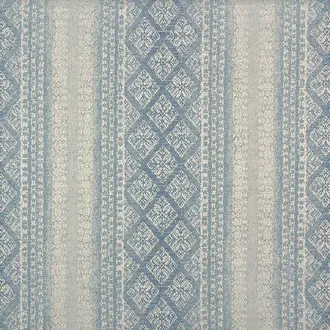





Ticking and pinstripes
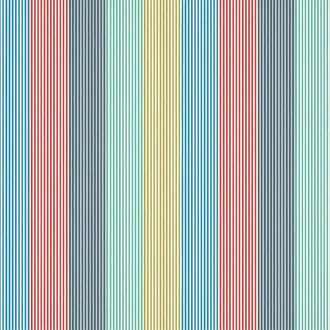
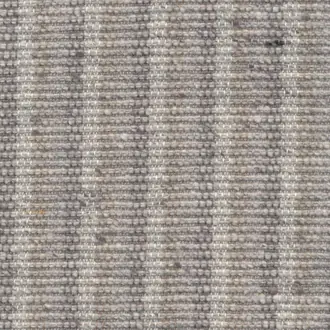
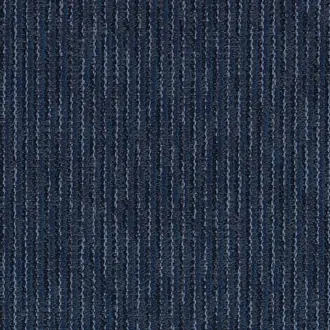
Closely spaced lines bring fine detail and can read almost as texture across a sofa or occasional chair.
 1724 reviews
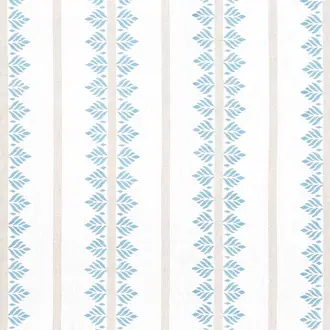
Explore designer striped upholstery fabric for sofas, armchairs, dining chairs, footstools and upholstered headboards. From fine ticking stripes to broad bands and expressive multicolour designs, stripes can bring tailored order or confident pattern to furniture.
Always check the recommended use and technical specification for the individual fabric. Order a sample to assess the colour, texture and stripe scale, and discuss centring, matching and cutting direction with your upholsterer before confirming the quantity.


Pattern shaped by furniture
Stripes interact directly with the shape of a piece of furniture. They can emphasise a sofa’s length, draw attention to a chair’s height or give a simple footstool a strong graphic identity. Unlike a flat pattern sample, finished upholstery introduces curves, seams, piping and separate cushions, all of which affect how the lines are seen.
The most successful result begins with the right scale and a deliberate cutting plan. Fine stripes can feel quietly tailored; broad or irregular bands make placement more visible and require greater consideration.
Closely spaced lines bring fine detail and can read almost as texture across a sofa or occasional chair.
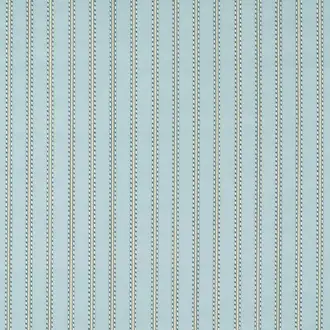
Regular bands offer an orderly, enduring pattern for both traditional and contemporary furniture.
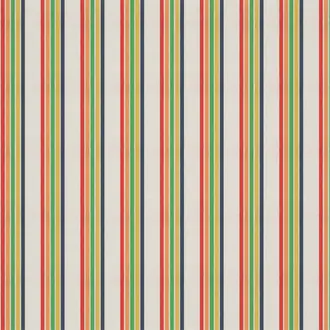
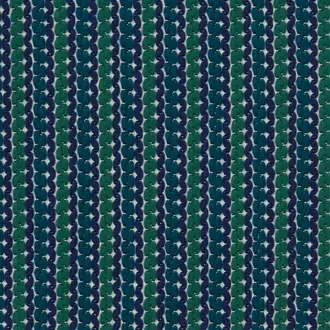
Broad or contrasting stripes make the upholstery a focal point and reward careful centring and matching.

Across larger furniture
A sofa gives a stripe a broad surface, but its back, arms, seat platform and loose cushions divide that surface into separate sections. A regular stripe can create a composed, architectural effect when the principal lines are centred and carried consistently across the piece.
Matching usually requires additional fabric and careful planning. The required quantity depends on the design repeat, fabric width, furniture dimensions, cutting direction and the upholsterer’s intended placement, rather than the metres needed for an unpatterned cloth alone.

Centring and continuity
On broad stripes, even a small change in cutting position can alter the balance of the finished furniture. The dominant band may be centred on the back, repeated across seat cushions or positioned symmetrically from the middle of the piece. Separate cushions can either continue the rhythm or deliberately interrupt it.
Discuss the visual priority with your upholsterer before cutting begins. Curved arms, boxed cushions and patterned piping can make exact continuity impractical, so the aim is a balanced result rather than assuming every line will meet at every seam.

Seams, curves and piping
A stripe is most regular on a flat panel. On a shaped chair, the cloth may need to be eased around curves or cut into multiple sections. Piping outlines the construction and can be matched to the stripe, cut from a contrasting band or made in a separate plain fabric.
The scale should suit both the overall piece and its smallest upholstered components. A stripe that looks balanced on a sofa back may feel oversized on a narrow arm or small dining-chair seat.

Orientation and proportion
Vertical stripes can emphasise height on a chair or headboard, while horizontal placement can broaden a long bench or sofa. The direction shown on the roll is not always interchangeable: turning the fabric may affect usable width, pattern direction, stretch, pile or performance.
Railroading means using the cloth across the roll, often to cover a wider piece with fewer joins. Only do this where the manufacturer’s information and the fabric construction permit it. Your upholsterer should confirm orientation before quantities are calculated.

Fine-scale pattern
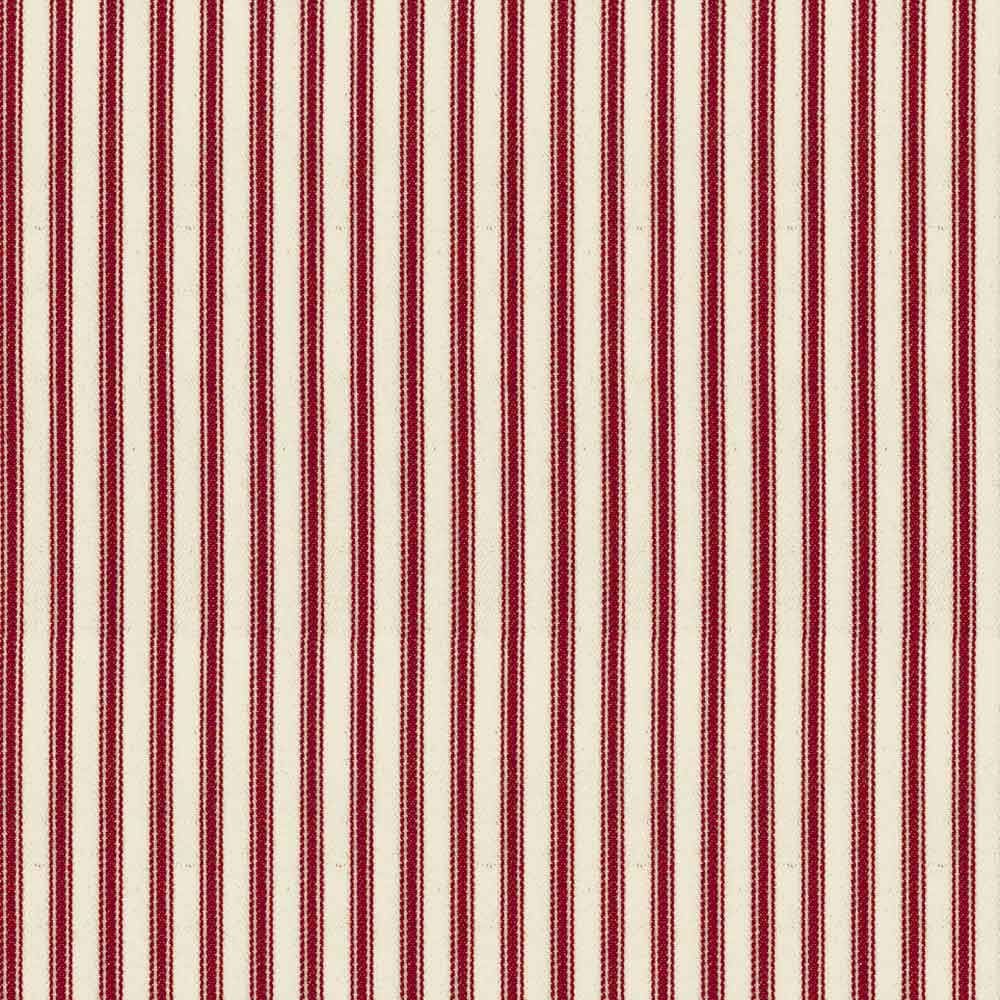
Ticking-inspired designs use narrow, regularly repeated lines that can appear softly textured from across the room. They suit furniture where a broad stripe would overwhelm the scale and offer an understated alternative to a completely plain weave.
Because the pattern repeats frequently, fine stripes can be more forgiving visually, although centring and straight cutting still matter. Always confirm upholstery suitability: the word “ticking” describes the appearance and heritage of the stripe, not a universal performance standard.

Statement furniture
An armchair, ottoman, bench or upholstered headboard can carry a stronger stripe without requiring it to dominate every seat in the room. Multicolour designs also provide a useful palette for choosing plain curtains, rugs, paint and accessories elsewhere in the scheme.
Look at the complete colour sequence before deciding where the fabric should begin and end. A small sample may contain only part of a wide repeat, so use it alongside the full design image and technical information.
Practical specification
Choose a fabric whose recommended use explicitly includes upholstery. Consider the manufacturer’s abrasion result, fibre composition, care instructions and any suitability distinction between occasional and general domestic seating. A higher figure should not be read in isolation: construction, seam performance, cleaning requirements and the demands of the household also matter.
If the piece will receive intensive use, is exposed to strong sunlight or requires contract performance, ask for guidance on the individual fabric rather than relying on appearance alone.
Plan before cutting
A sample helps you judge the real colour, handle, weight and stripe spacing against the furniture and surrounding room. Place it over a curved edge and view it both close up and from across the room. For broad or irregular designs, consult the full-width image and pattern information because a small cutting may not include every band.
Continue browsing
Frequently asked questions
No. Choose a fabric whose recommended use explicitly includes upholstery and review its abrasion performance, composition and care instructions for the intended piece.
They often require additional allowance for centring and matching across panels, seams and cushions. The exact quantity depends on the stripe repeat, fabric width, furniture and cutting plan.
Either direction can work visually, but the fabric cannot necessarily be turned. Confirm its construction, usable width, pattern direction and manufacturer guidance with your upholsterer before ordering.
Railroading means using fabric across the roll rather than in its usual lengthwise direction, often to cover a wide piece with fewer joins. It is only appropriate where the individual fabric is suitable.
Many ticking-style fabrics are available for upholstery, but the ticking appearance alone does not confirm performance. Check the specification and recommended use of the exact design.
The upholsterer plans a reference line or dominant band and positions each pattern piece accordingly. Exact continuity may be affected by curves, piping, separate cushions and the furniture’s construction.
Yes, suitable striped upholstery fabrics can be particularly effective on headboards. The central line, direction and relationship between the stripe and the headboard’s shape should be planned before cutting.
A sample shows the real colour, texture, weight and stripe scale. For broad stripes, also consult the complete design image because the cutting may show only part of the colour sequence.
Prices and taxes are calculated based on your country.
Some items may not be available for delivery to every country — we will tell you at the basket or checkout if anything cannot be sent.
Necessary cookies enable core functionality such as page navigation, your shopping basket and secure checkout. The site cannot work properly without them.
| Cookie | Provider | Duration |
|---|---|---|
| __cf_bm | Cloudflare | 30 minutes |
| cf_clearance | Cloudflare | Varies |
| ect_consent | First party | 180 days |
| ectcartcookie | First party | Session |
| ecthash | First party | Session |
| ectordid | First party | Session |
| ectsessid | First party | Session |
| PHPSESSID | First party | Session |
| tmi_bv | First party | 2 days |
Preference cookies let the site remember choices you make (such as your region or recently viewed items) for a more personal experience.
| Cookie | Provider | Duration |
|---|---|---|
| ect_country_popup_shown | First party | 1 day |
| WRITECLL | First party | Persistent |
| WRITECLP | First party | Persistent |
Statistics cookies help us understand how visitors use the site by collecting and reporting information anonymously.
| Cookie | Provider | Duration |
|---|---|---|
| _ga | Google Analytics | 2 years |
| _ga_ | Google Analytics | 2 years |
| _hj | Hotjar (via Google Tag Manager) | 30 minutes - 1 year |
| fs_uid | FullStory (via Google Tag Manager) | 1 year |
Marketing cookies track visitors across sites to display relevant ads and measure campaign performance.
| Cookie | Provider | Duration |
|---|---|---|
| __kla_id | Klaviyo | 2 years |
| _gcl_ | Google Ads (via Google Tag Manager) | 90 days |
| id1 | First party | ~6 months |
| id2 | First party | ~6 months |
| IDE | Google DoubleClick (third-party, doubleclick.net) | 13 months |
| PARTNER | First party | Persistent |